For this part, we will write an additional introduction of yourself or your business. This can be about your company history, success stories, or the product or services you offer. It can also tell about how you helped clients achieve their desired results.
03
Offering 3
For this part, we will write an additional introduction of yourself or your business. This can be about your company history, success stories, or the product or services you offer. It can also tell about how you helped clients achieve their desired results.
“We will write a hypothetical testimonial from a satisfied customer. You can replace this with actual testimonials from your clients. Testimonials are a great way to inspire potential customers to trust you.”
– Testimonial Author Name
Search engine m
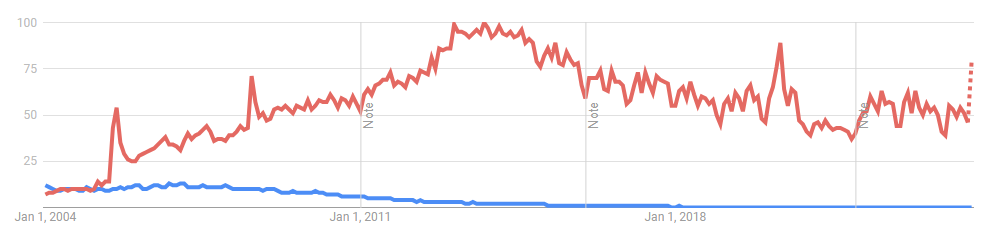
arketing has replaced classifieds as the consumers’ go-to for finding goods and services. Google took over from Yellow Pages in August 2005. Interestingly, searches peaked for Google at the start of 2014 and then declined. The main reason is that Google became the default search engine on mobile devices, leading people to no longer need to search for the term.
History
How Does Google Ads Work?
Google Ads 101
Quality Score
Expected CTR: how strong Google expects your CTR to be. Relevance of that Keyword to the product/service you sell/promote. Landing Page experience includes page speed and how well users engage with your website. Quality score is measured in a score out of 10. It is no longer a metric to which you optimize your Google Ads account but a diagnostic tool to measure your campaign’s and website’s quality.
Ad rank
One way to check the health of a Google Ads account is to check the metric “Lost IS due to rank.” In this case, the higher the rank, the poorer your score. Google outlines Ad Rank on its site, but let’s dive in.
Bids—Automated bidding is so prevalent that “Bids” refers to two things: the type of bid strategy you have selected and the budget you have applied to the campaign.
Quality of Ads & Landing Page—Are your ads up to spec? Text, Image, and video? You need to satisfy the ad criteria, which is straightforward in theory. The landing page is the big variable here. If your landing page has issues, your performance will be immediately impeded. Running a Google Lighthouse report will show you many issues, from page speed to the dreaded CLS issues.
The competitiveness of an auction—Understanding how competitive the auction is is important before changing your bidding. I always recommend analyzing this first using the Auction Insights tool.
Ad Rank thresholds—Google has introduced a new metric that dynamically checks the quality of ads before deciding which ads will win the auction.
The context of the person’s search: Do your keywords match your customers’ search queries? If not, they are likely candidates for a low CTR.
The expected impact from your ad assets and other ad formats means how many assets you are utilising, for instance, sitelinks or click-to-call.
PMAX
Along comes PMAX, which literally throws all of the above out the window. I will continue to write about PMAX and will post here soon.
What If Google doesn’t work?
Google may not be the best fit for your business, but you might have spent heaps of money for little in return. User behaviors change per category. For instance, nobody goes onto Google to purchase a loaf of bread and milk.
They visit the retailers first.
Most big businesses use paid search engines for their online stores. We’re looking at search engines that you, as the customer, can manage, typically called “Self-Service Platforms.”
An example of a Serviced Platform is REA. This is where they will take your information, images, and budgets and run the campaign with their internal teams.
Here are some examples of companies you may not know that run self-service search engines:
Businesses: Big W & Woolworths.
Businesses: Coles, Target, Officeworks.
Businesses: Amazon.
Business: Bing (It’s called Microsoft Ads, but I can’t kick the habit.)